How much for how many
An animation documentary, developed as part of Re:Anima program in Belgium, Portugal and Finland
Technique: 2d animation mixed-media | Genre: Social Issue | Length: 5.30 min
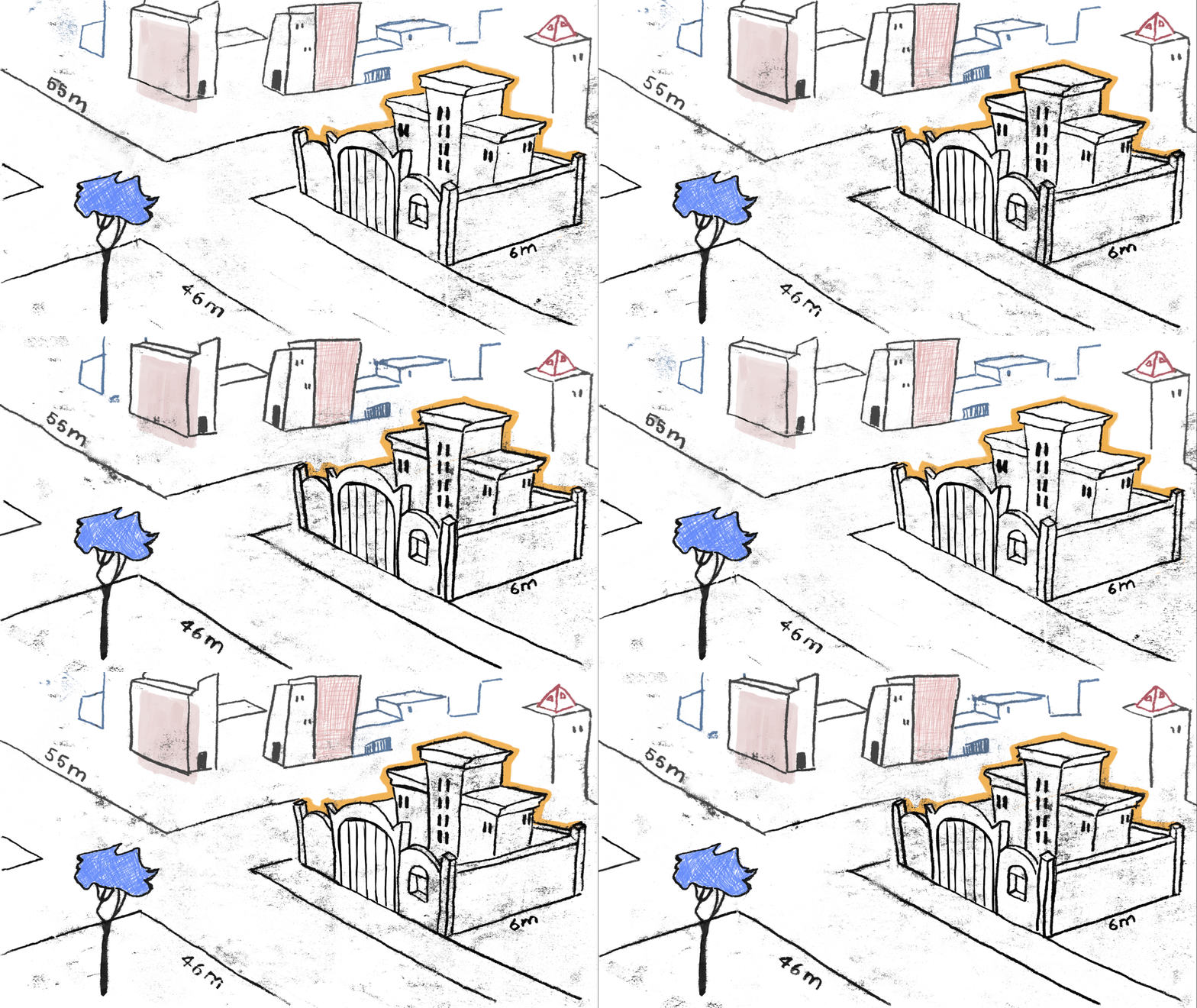
''It is all about space not over the skys but on the ground''
The film is inspired by the story of Mohamed Bouazizi — a Tunisian hawker whose self-immolation in 2011 sparked the Arab Spring movement. Throughout this work, I visualized the vulnerabilities of lower-class communities who face structural violence under urban control policies and bureaucratic systems. This Film stands as a protest by itself and Its primary goal is to raise awareness and provoke thoughts.
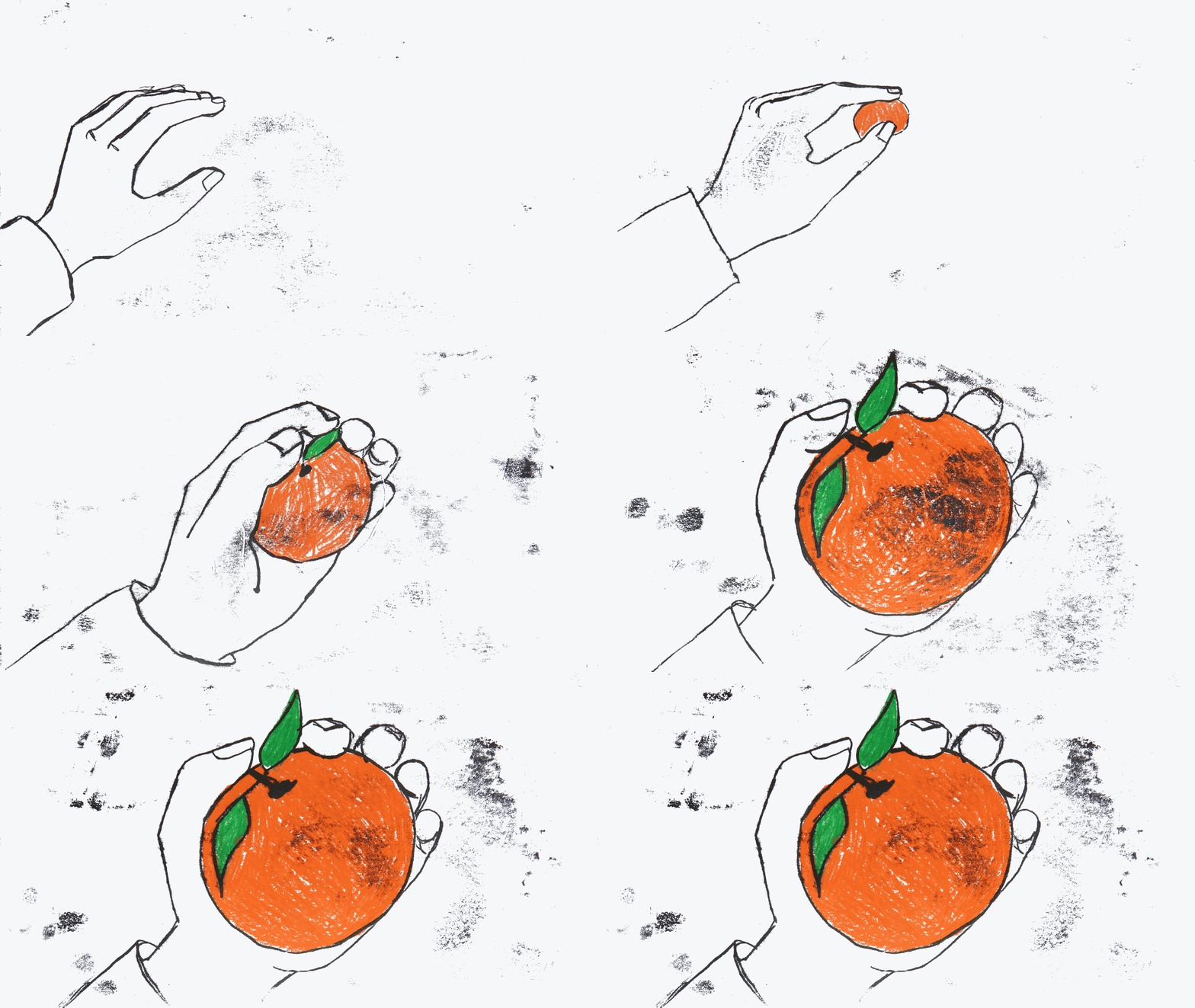
Written and directed by: (Ferook) Sara Saffari
Music: Roosa Räsänen
Animators: (Ferook) Sara Saffari_ Tayebeh Baghbani
Technical assistance & Actor: Daniel Oliveira
Compositor and editor: (Ferook) Sara Saffari
Credits
TVPaint
Adobe Aftereffects
Adobe Premiere
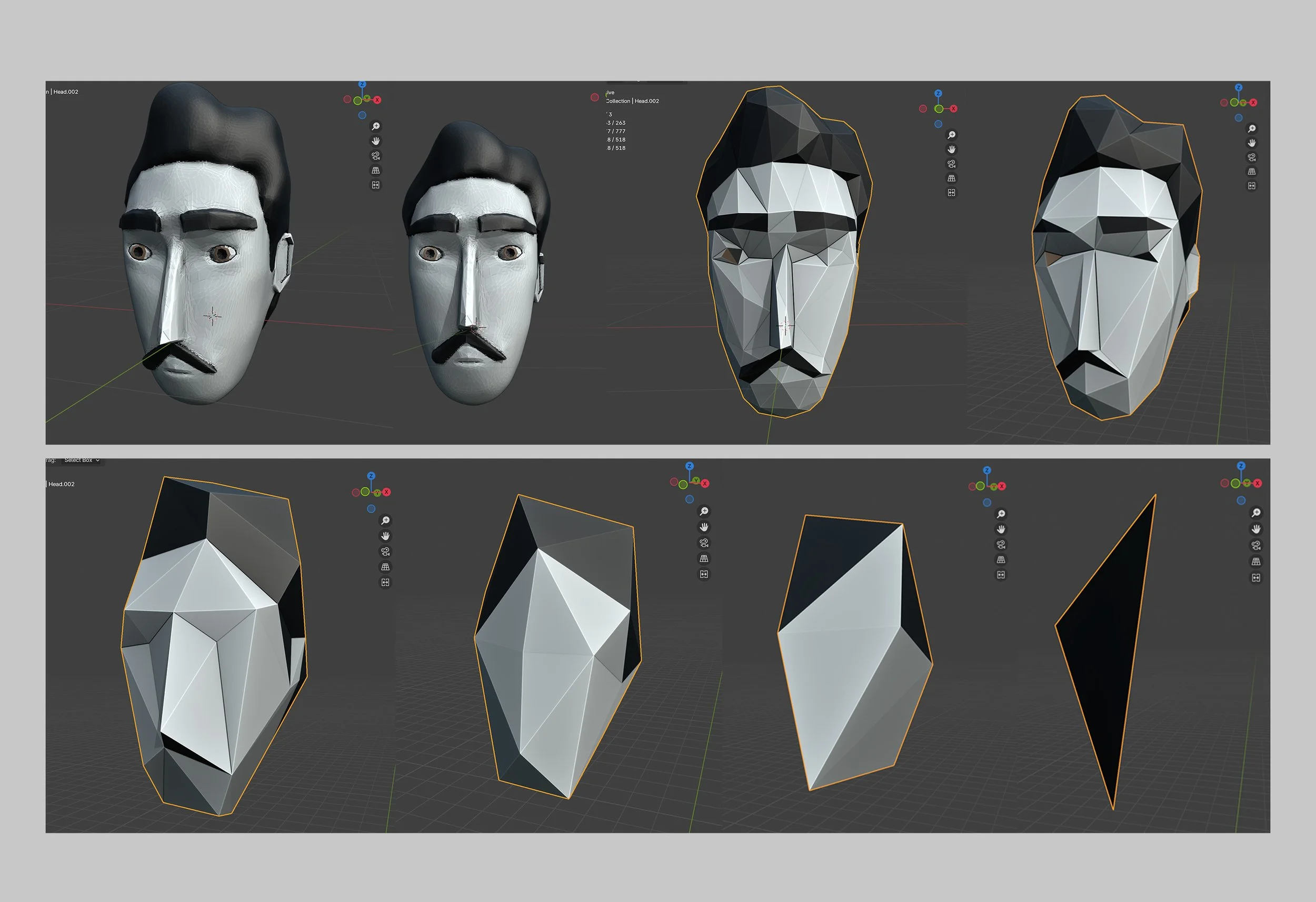
Blender
Dragon frame
Adobe Audition
Google workspace
Softwares
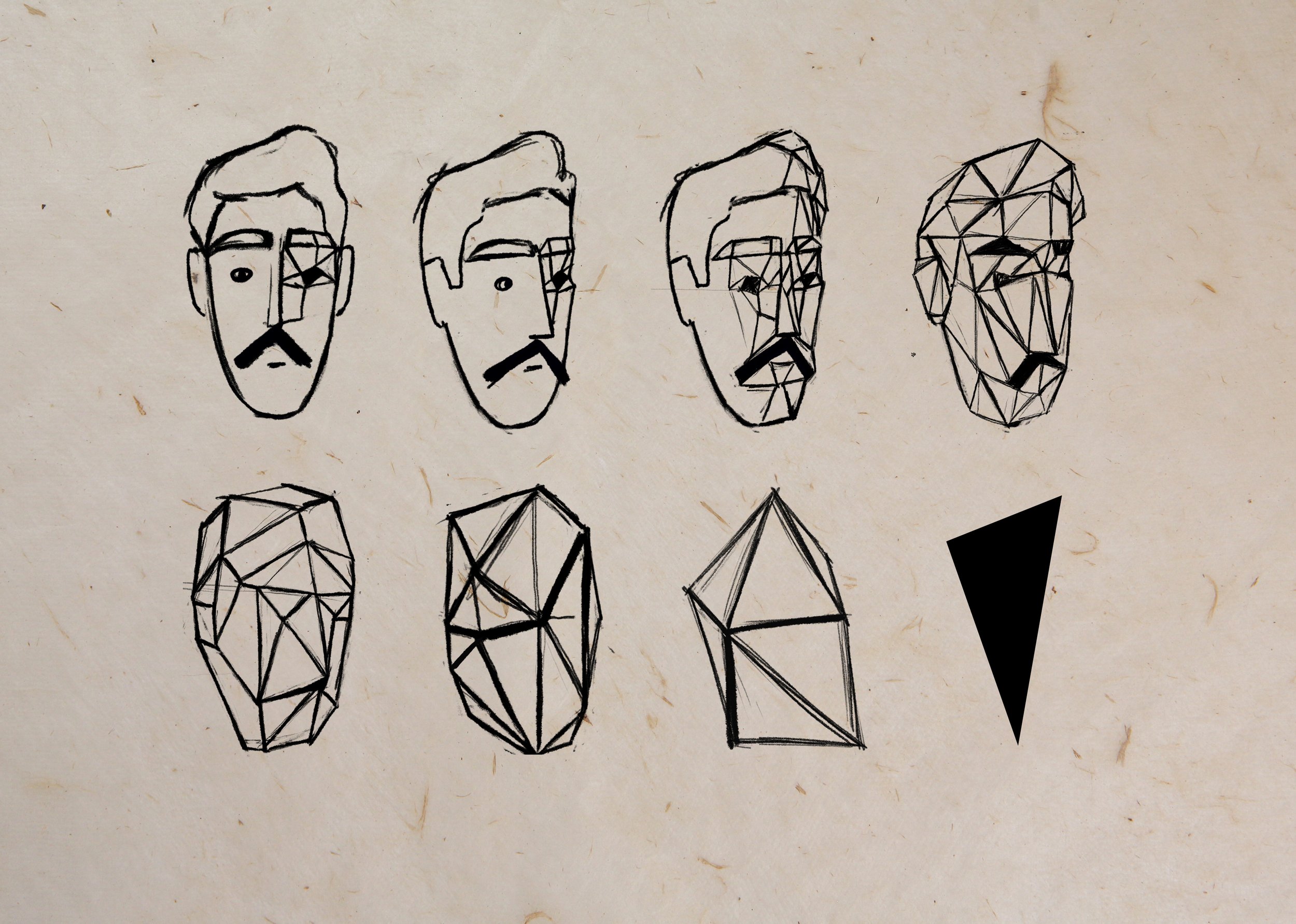
Character design
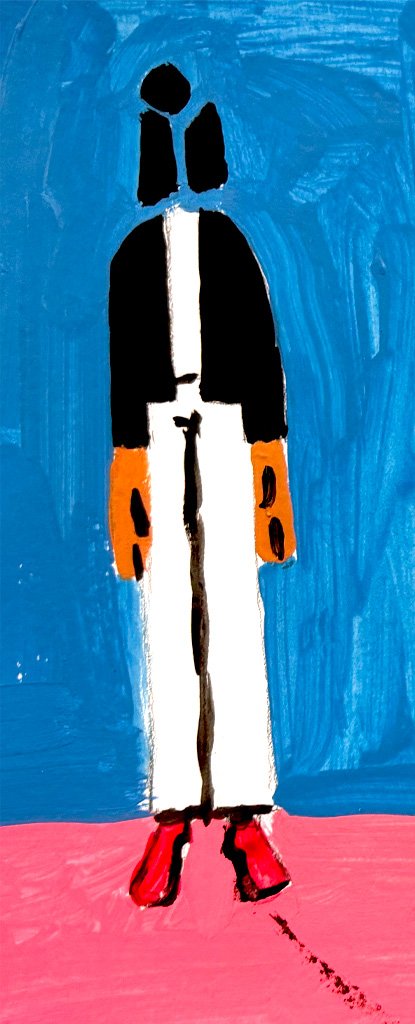
The idea of manifesting alienation in my artwork dates back two years, when I was not yet familiar with the theoretical framework of this experience. At that time, I was inspired by the French poet Charles Baudelaire, which led me to create a painting based on one of his texts, Loss of Halo. In his text, a sentence such as "my halo slipped off my head and onto the filthy ground" inspired me to visualize the scene from my own perspective.
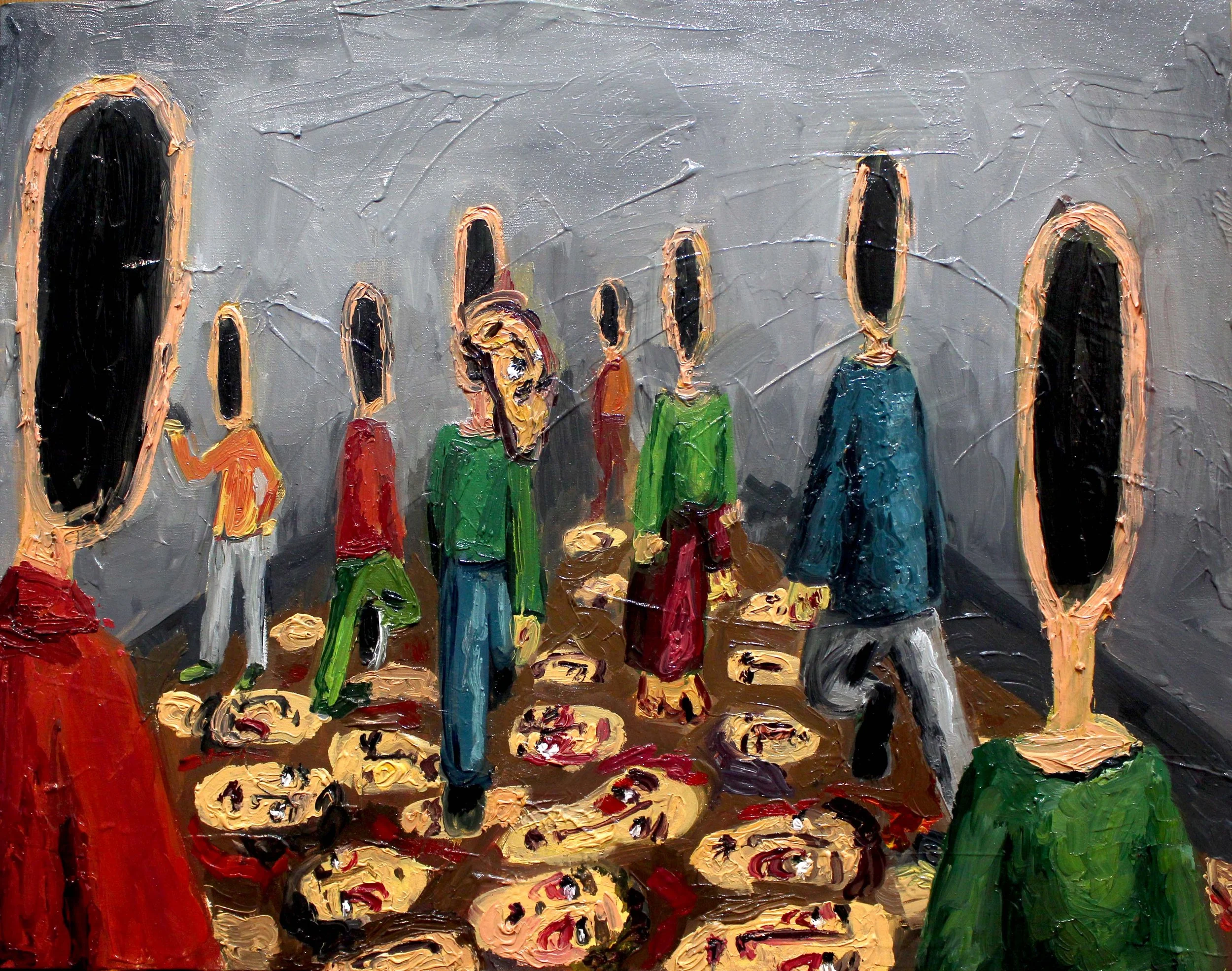
Loss of Halo (2023)
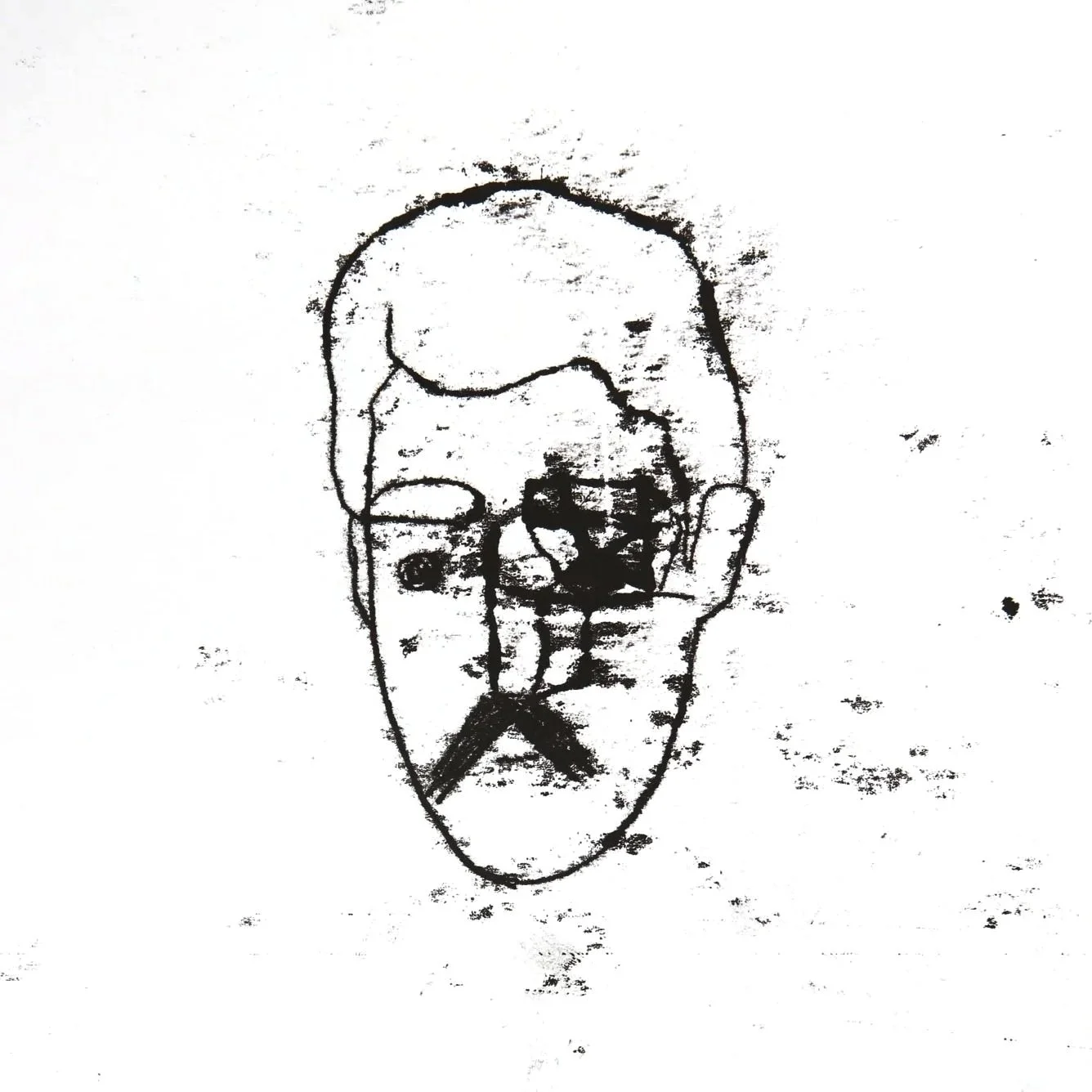
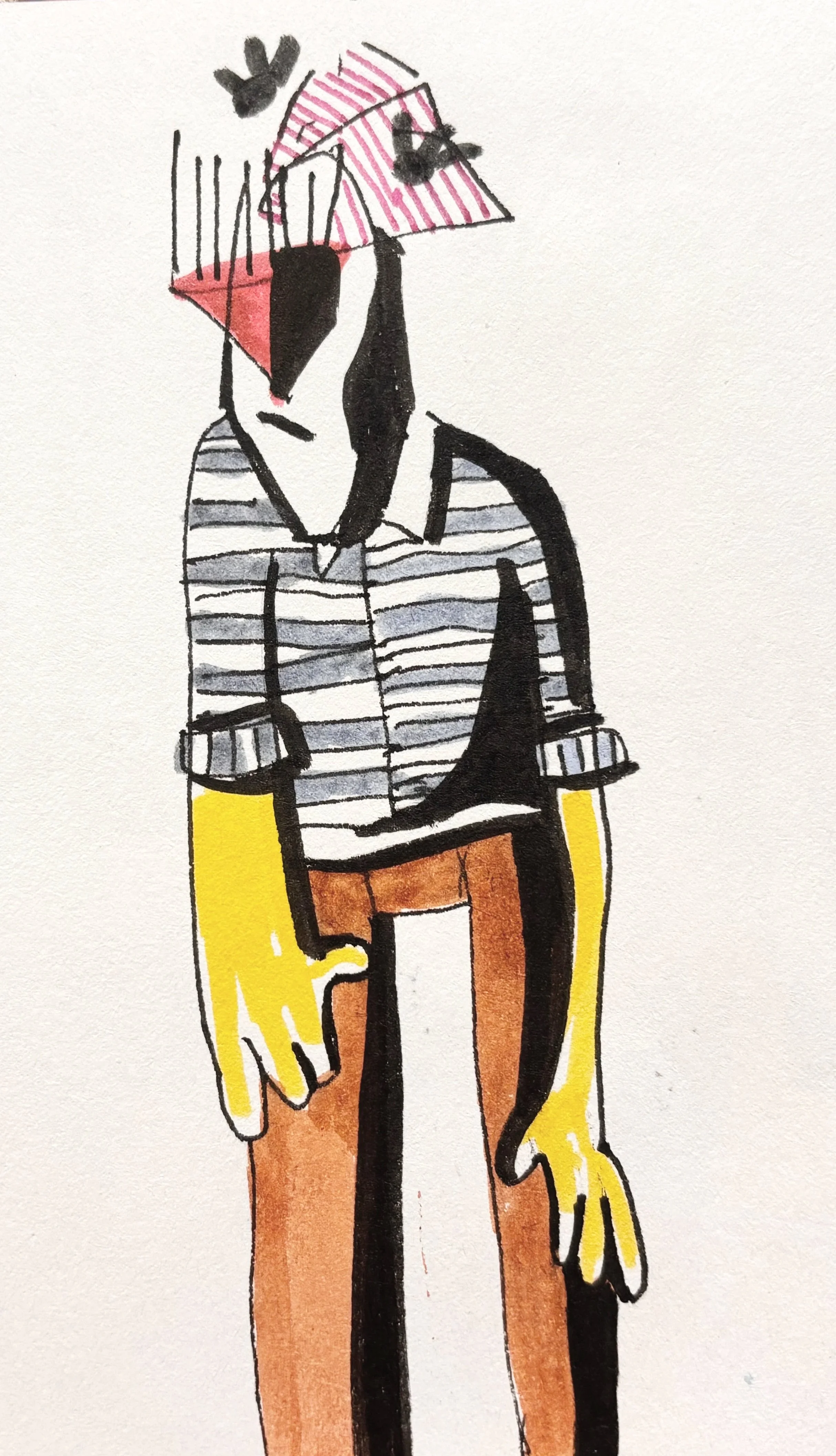
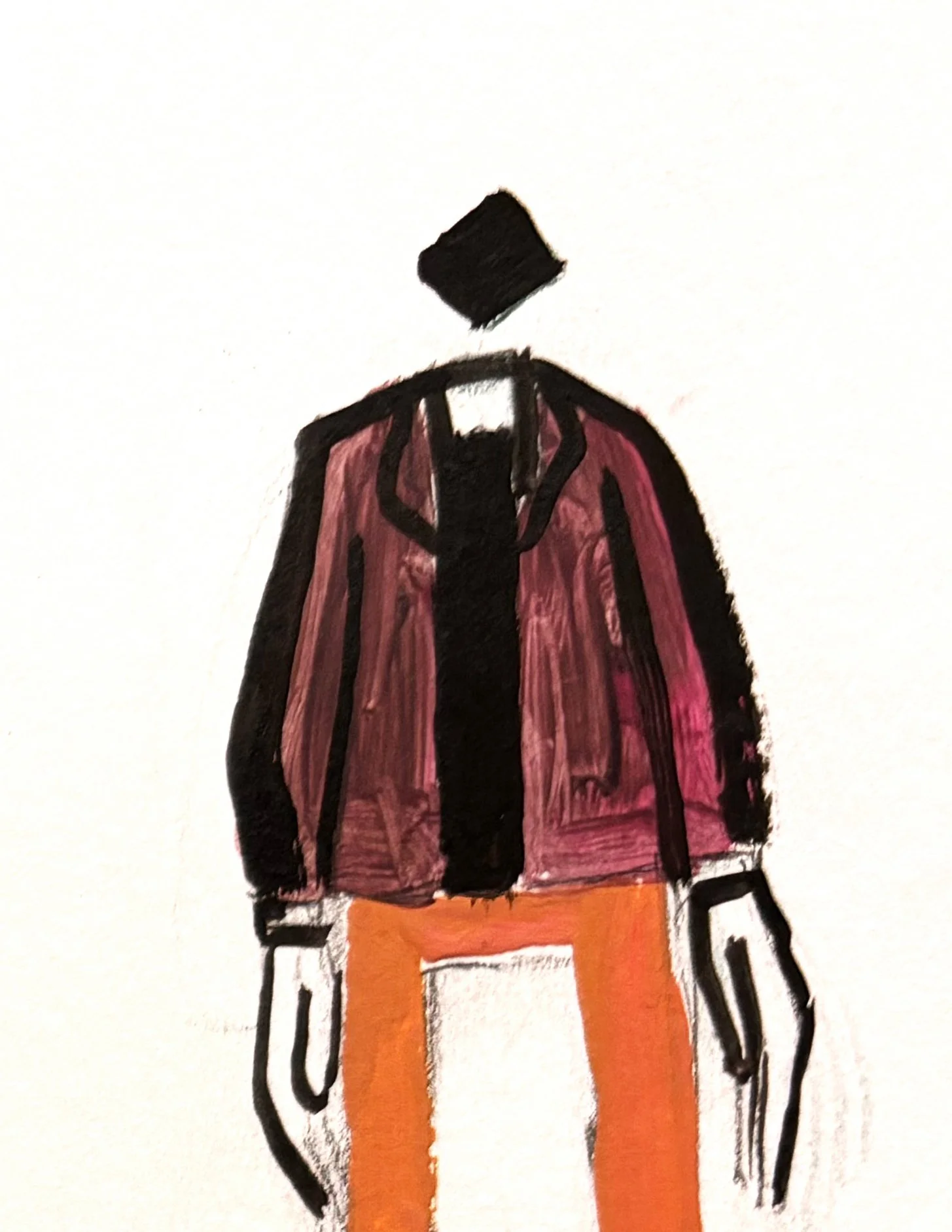
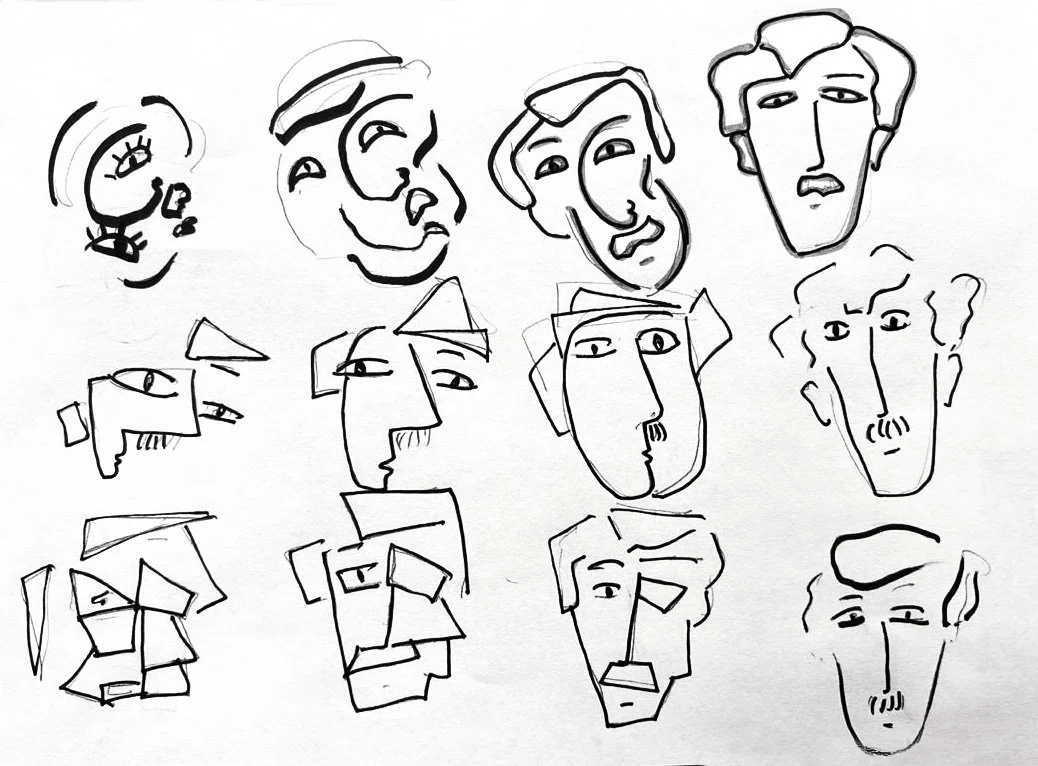
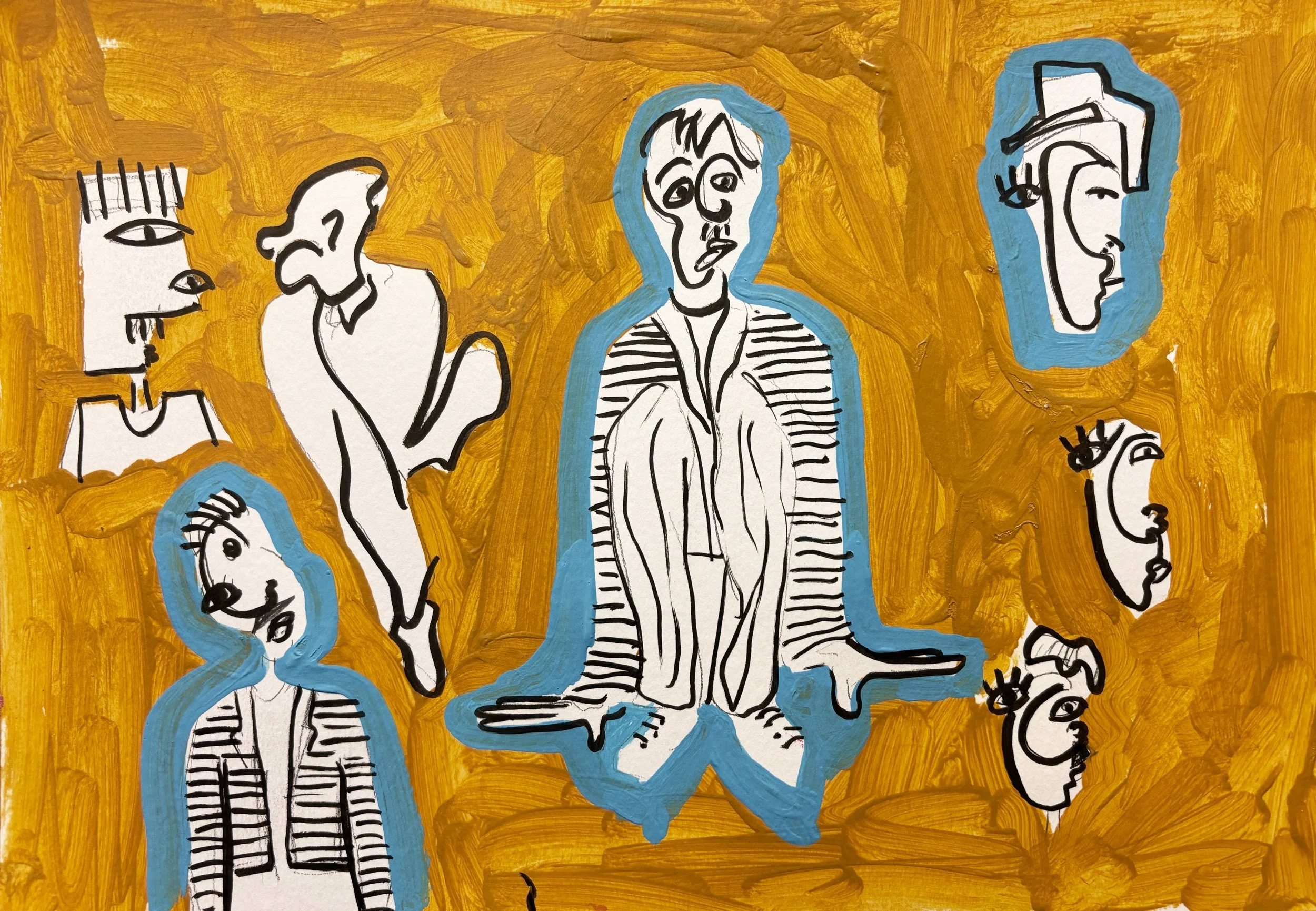
Many workers experience a sense of dehumanization and estrangement from life under the exploitative structure of capitalist society (Kalekin-Fishman & Langman, 2015). In the 1840s, the German philosopher Karl Marx described this feeling of separation from life as “Alienation.” I have explored this concept in my films, developing a distinct visual style through character design. In moments when a character experiences pain, their face distorts into geometric shapes. This visual distortion reflects the psychological weight of pain and suffering, and how these inner struggles can manifest physically.
Researching visual methods to embody alienation:
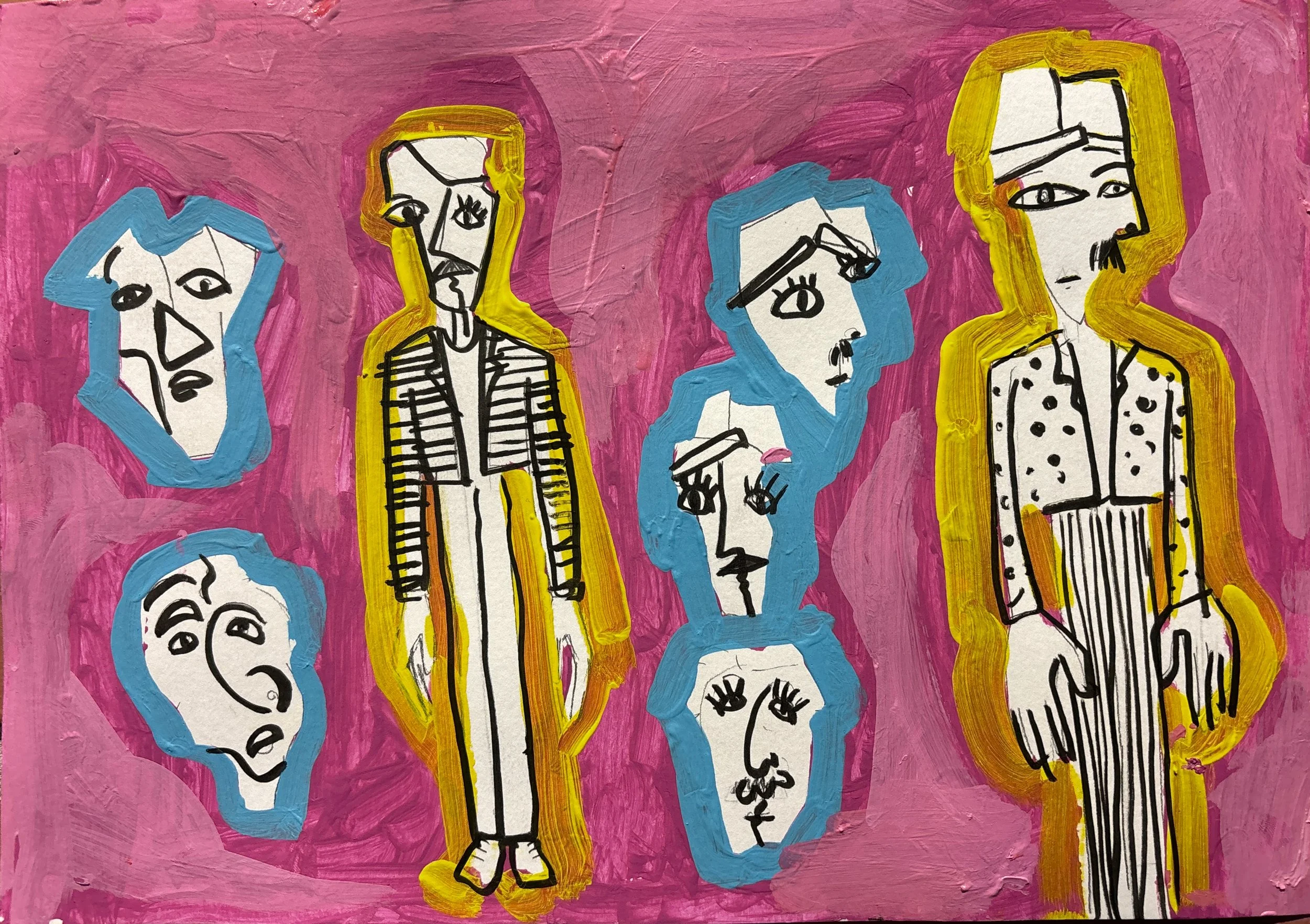
Final Design
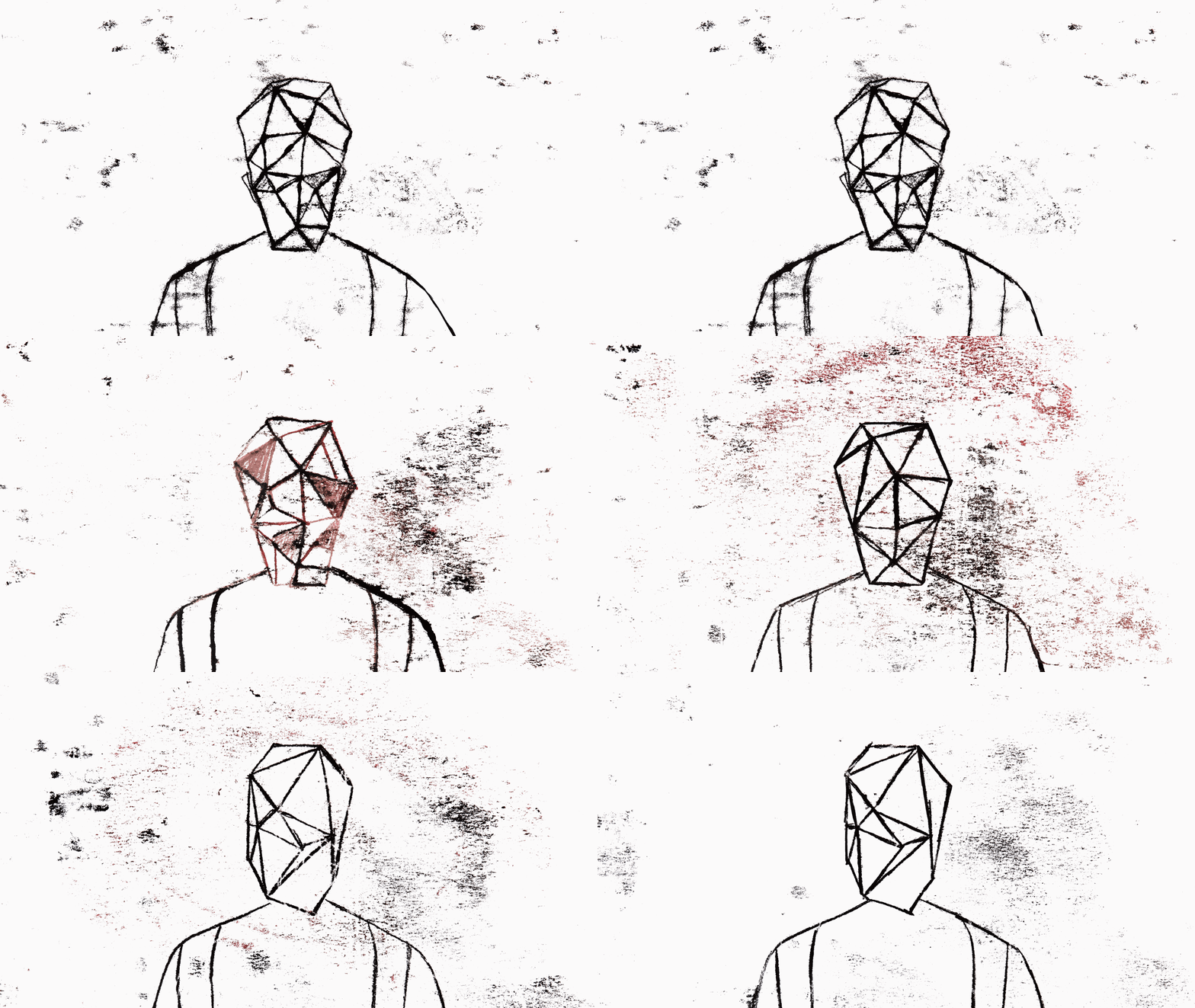
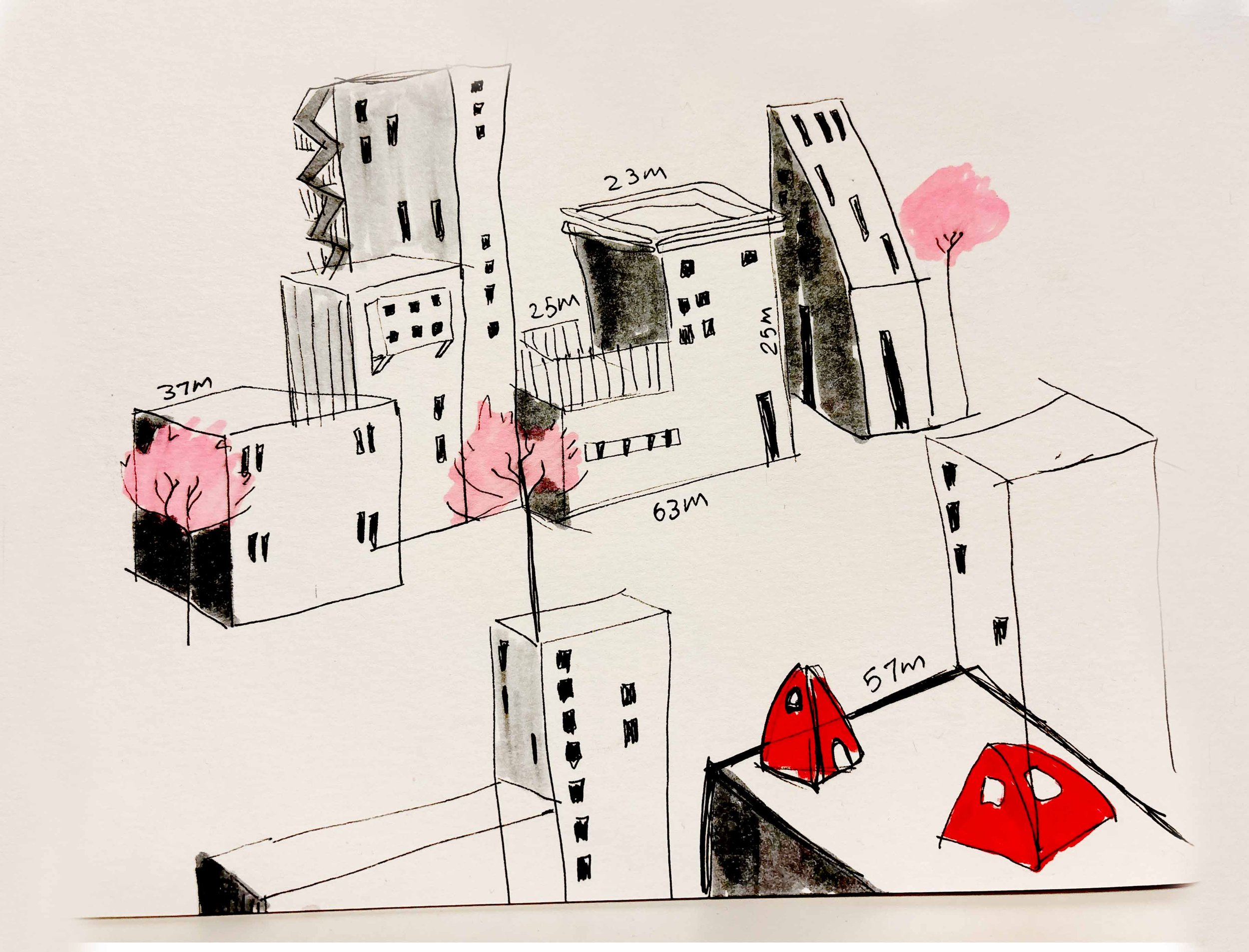
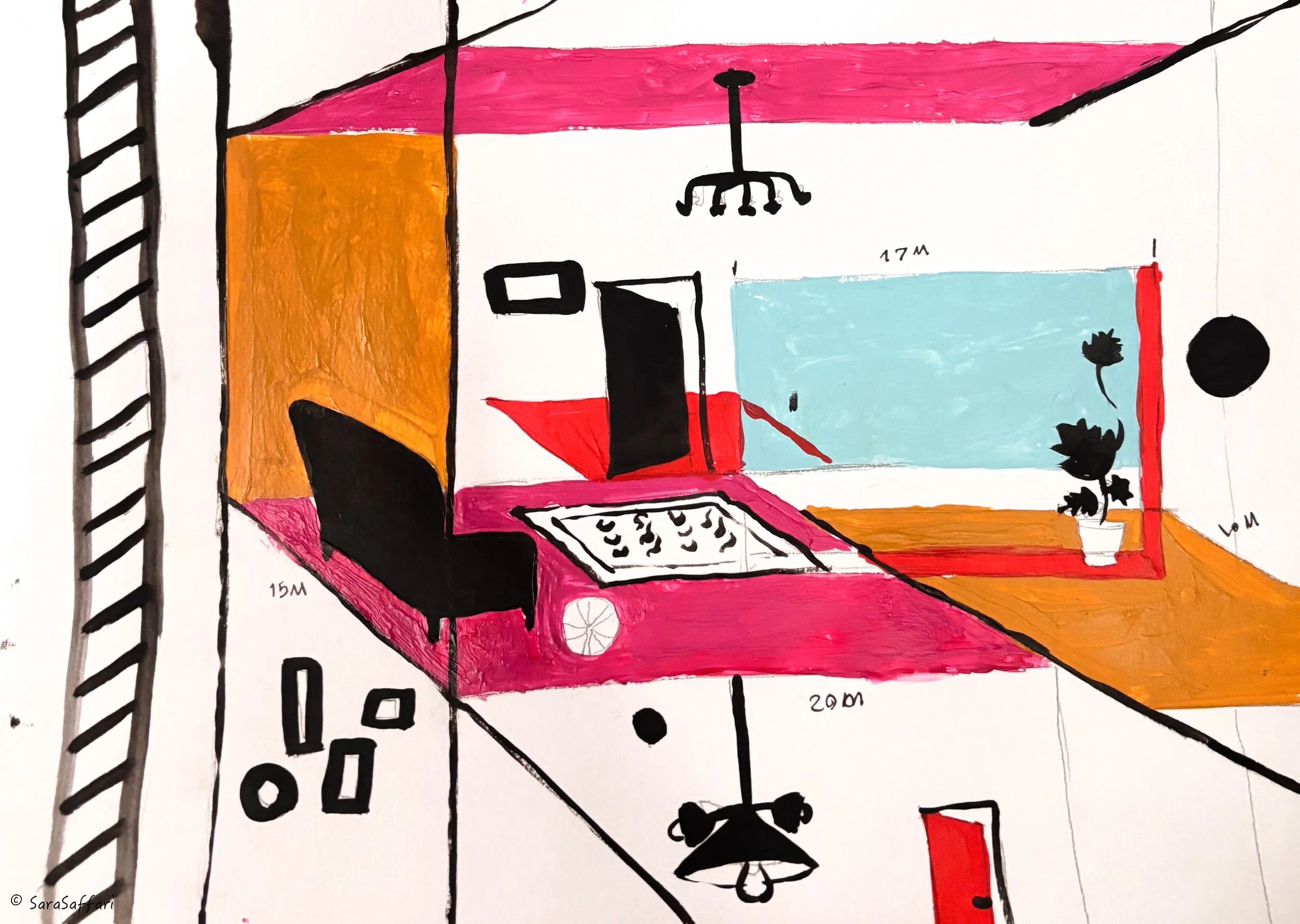
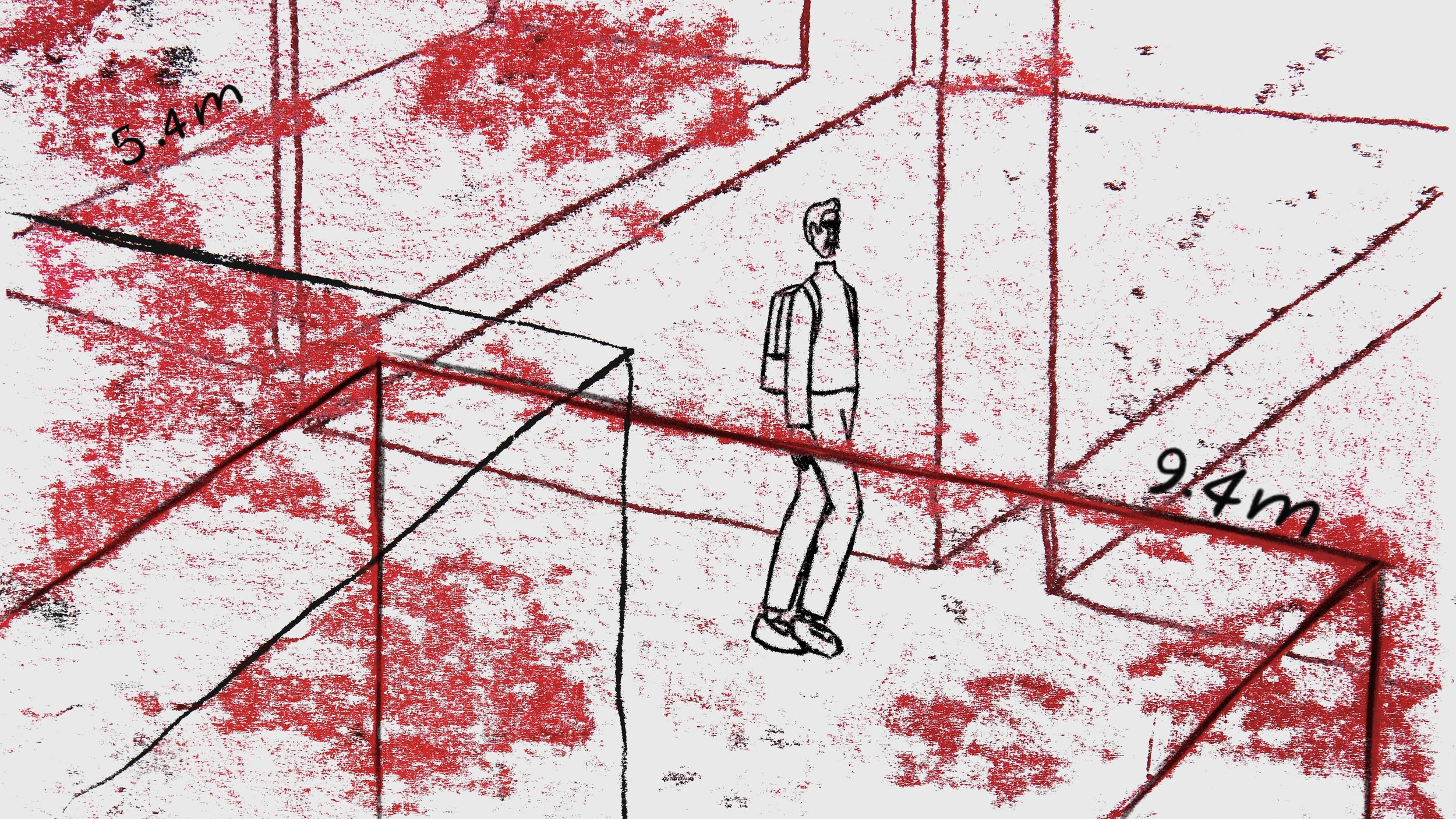
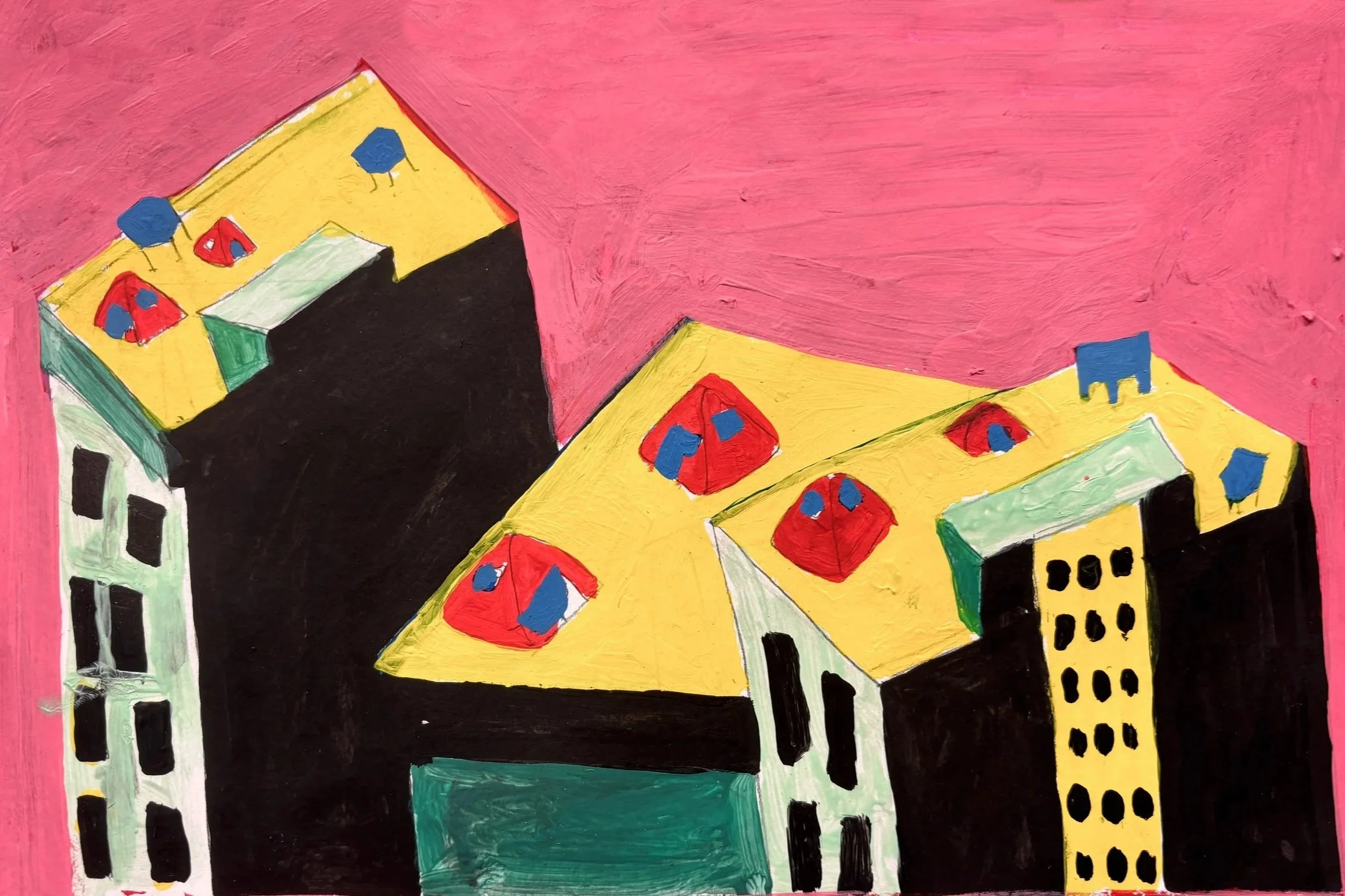
Environment Design
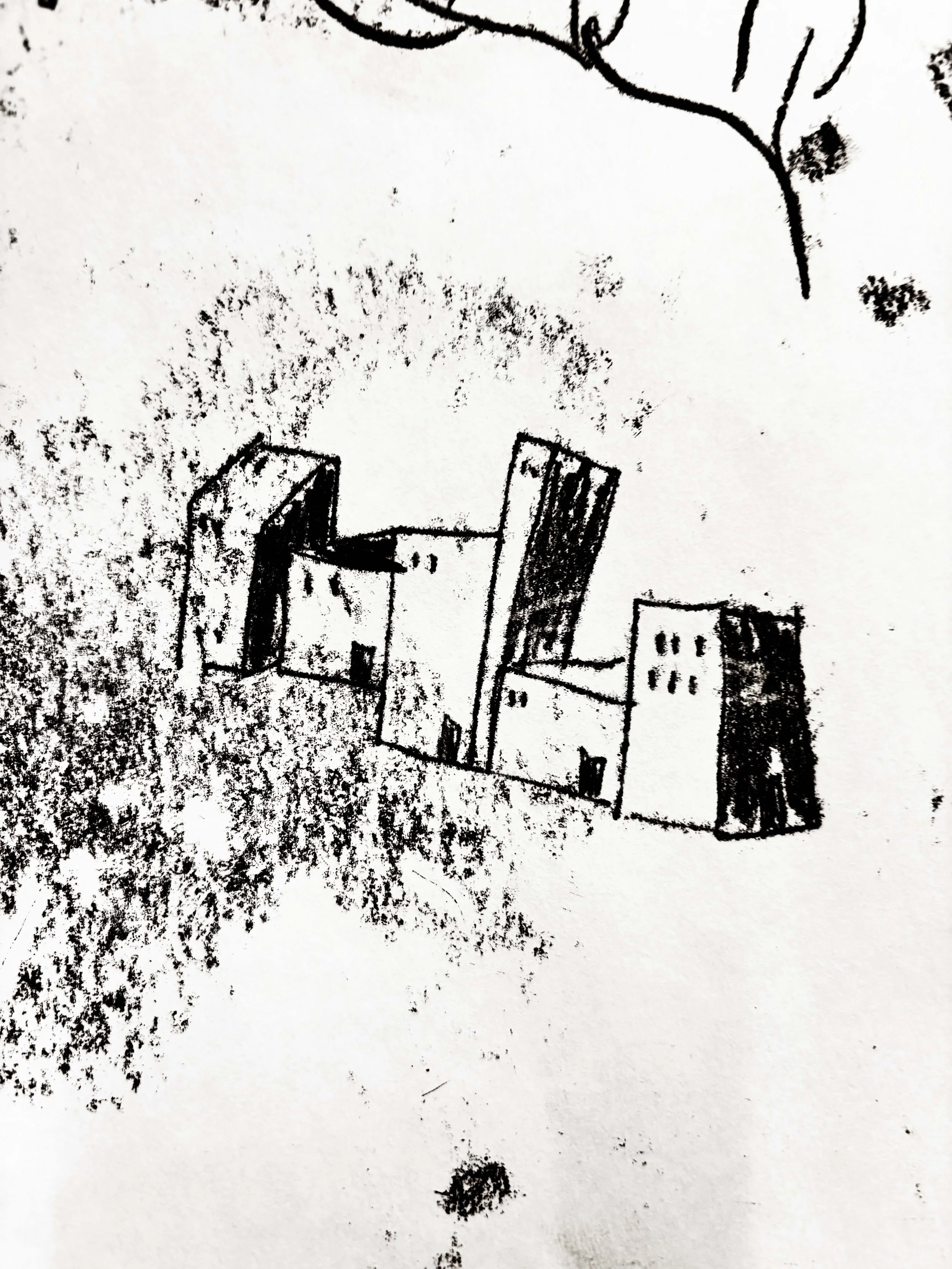
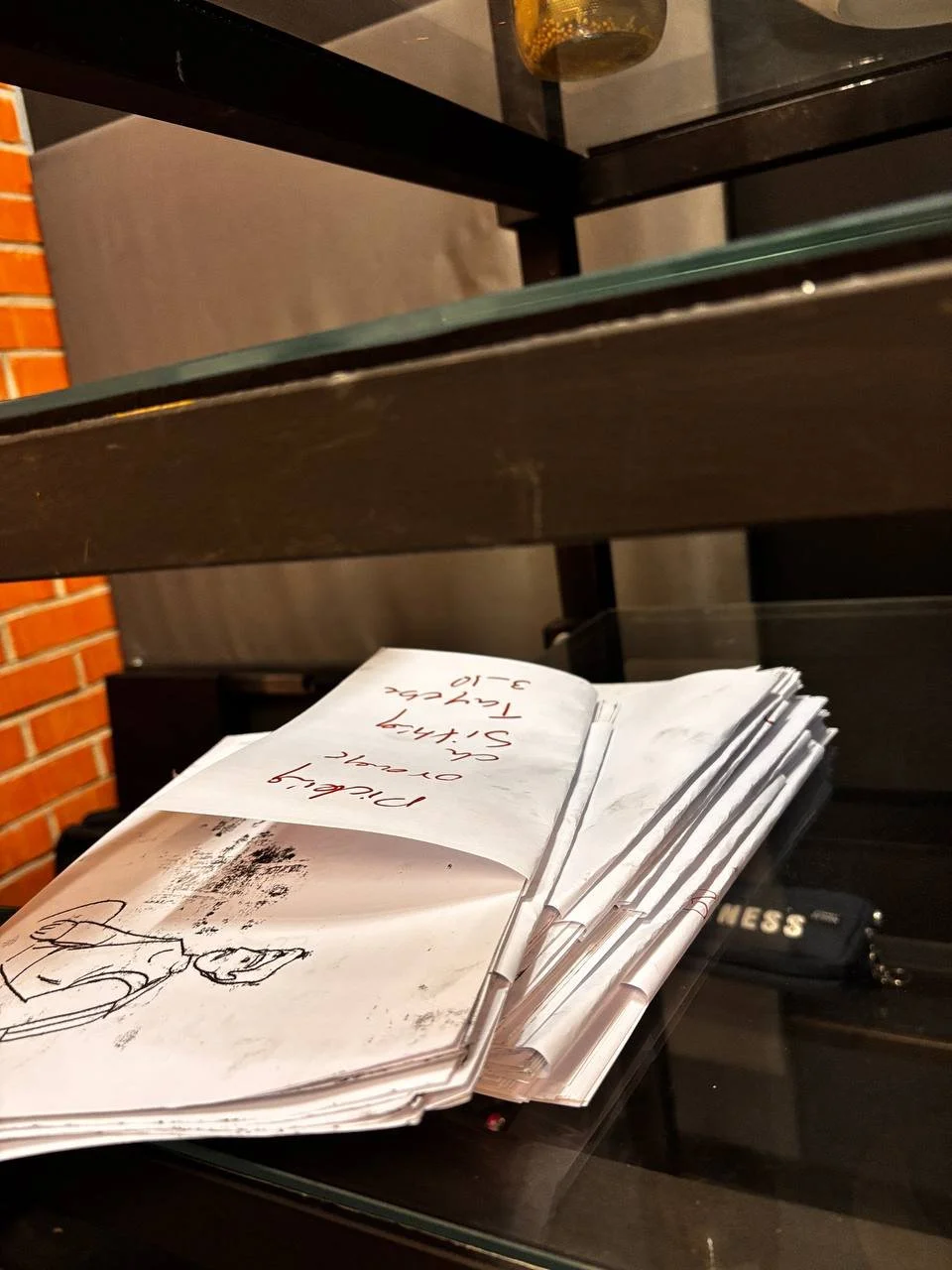
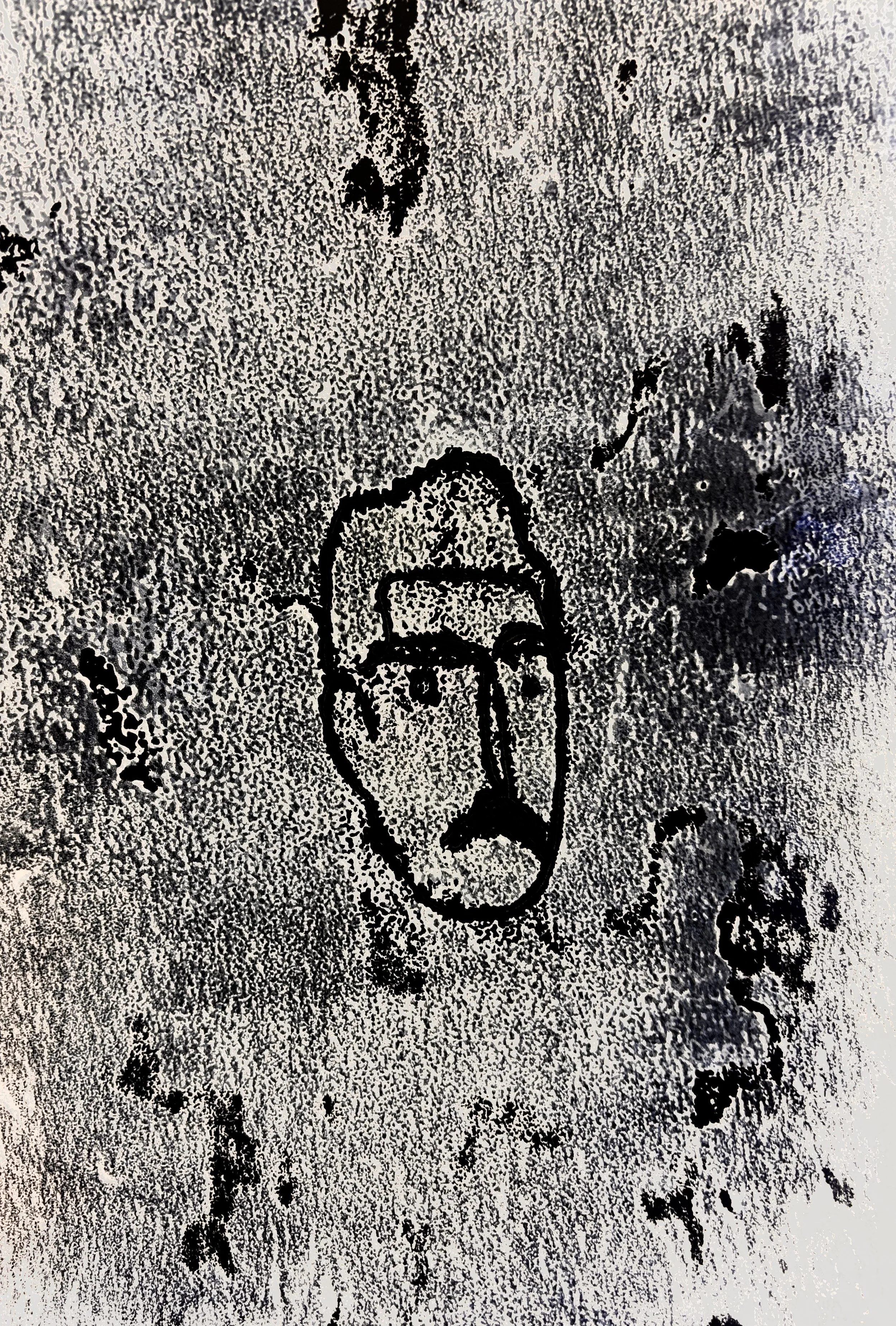
PRODUCTION PROCESS_ MONOPRINT
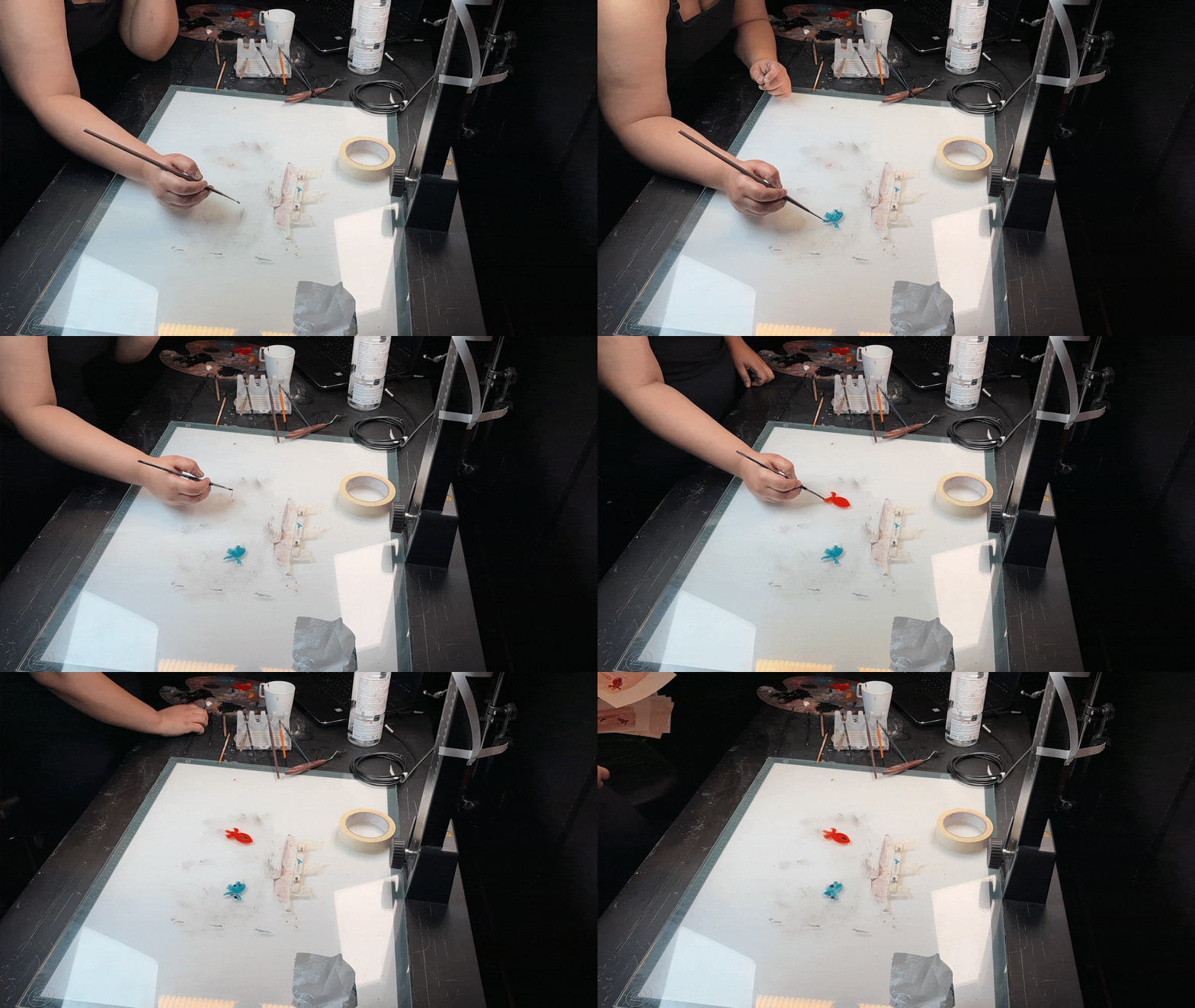
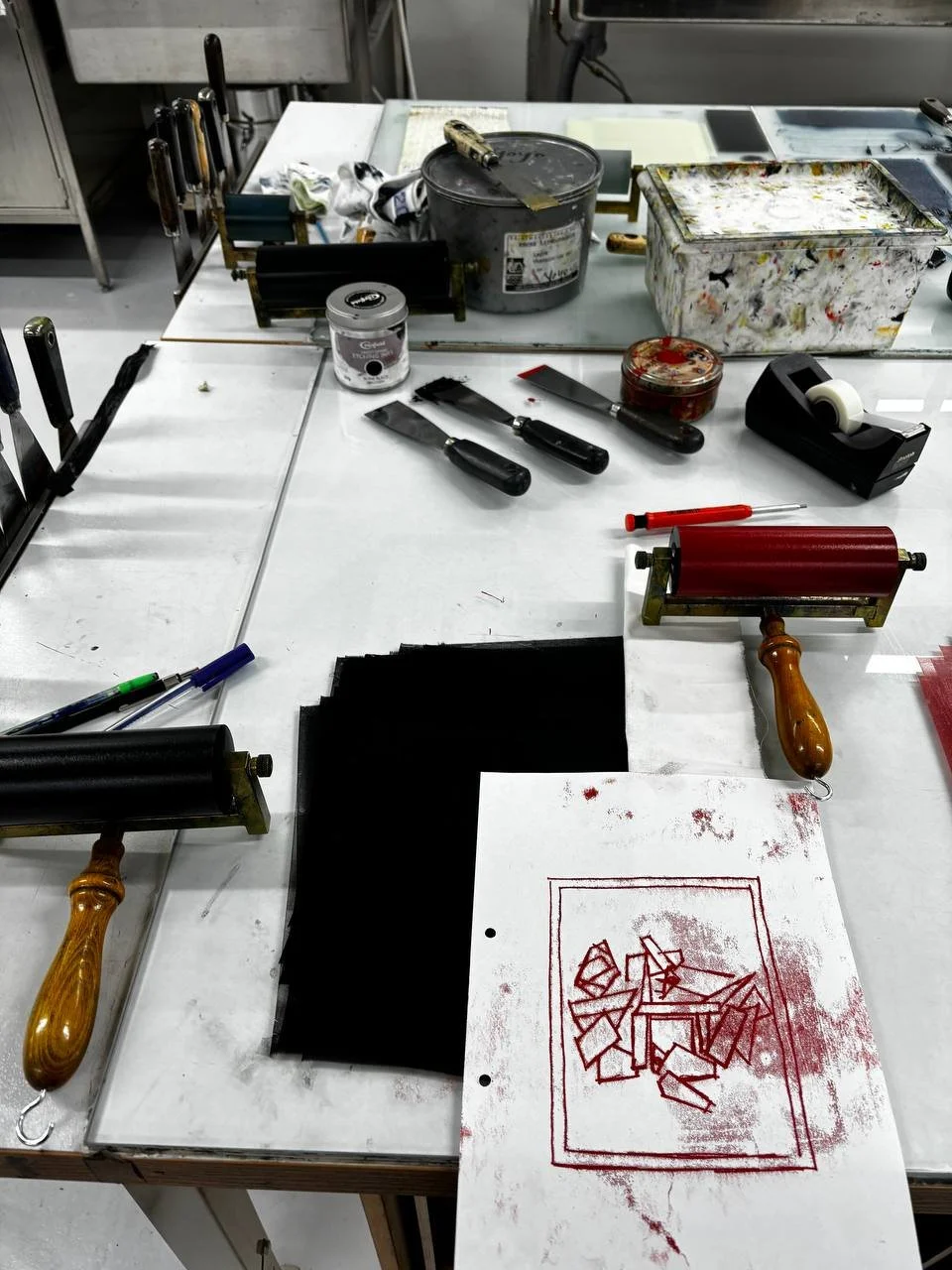
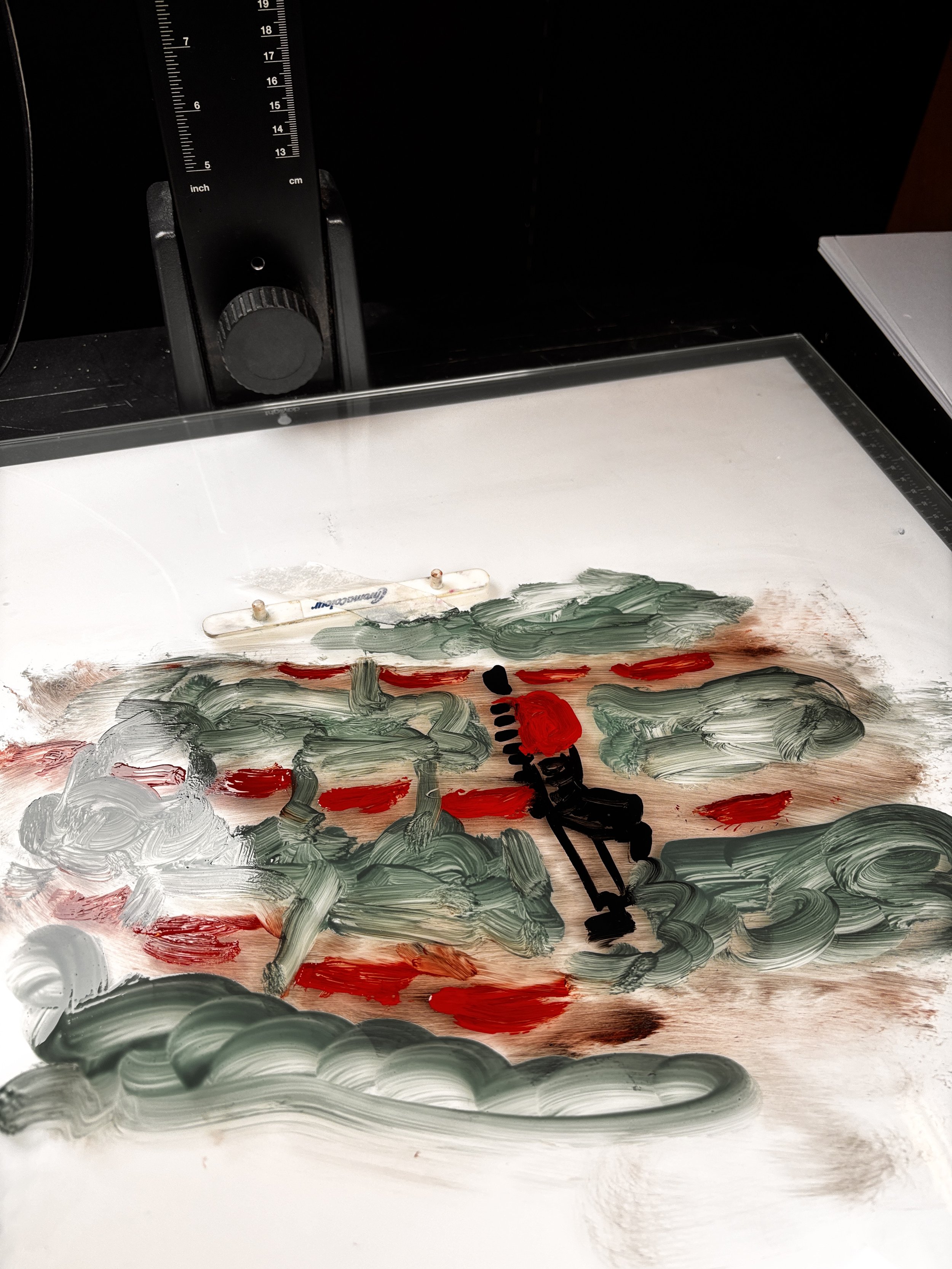
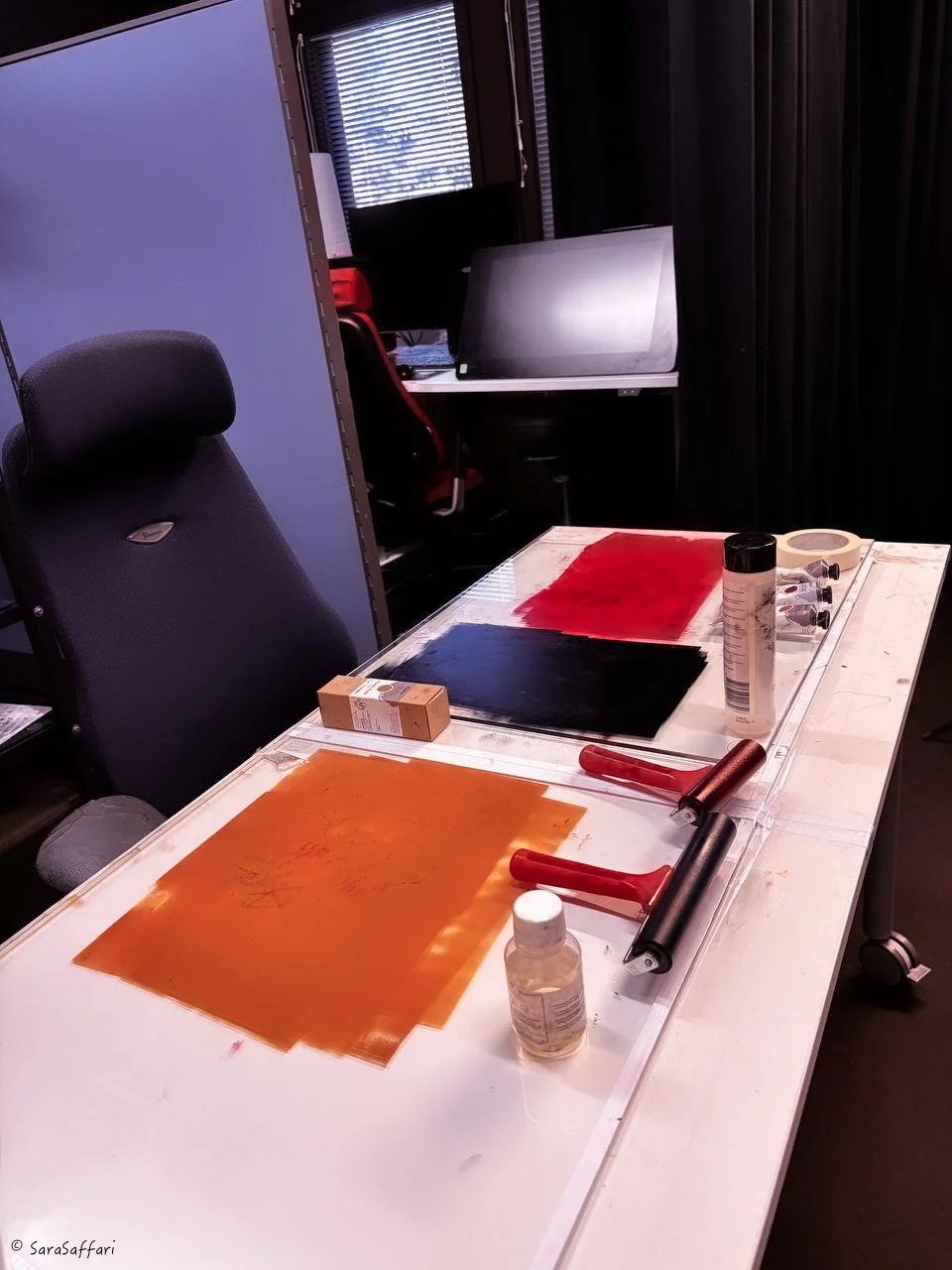
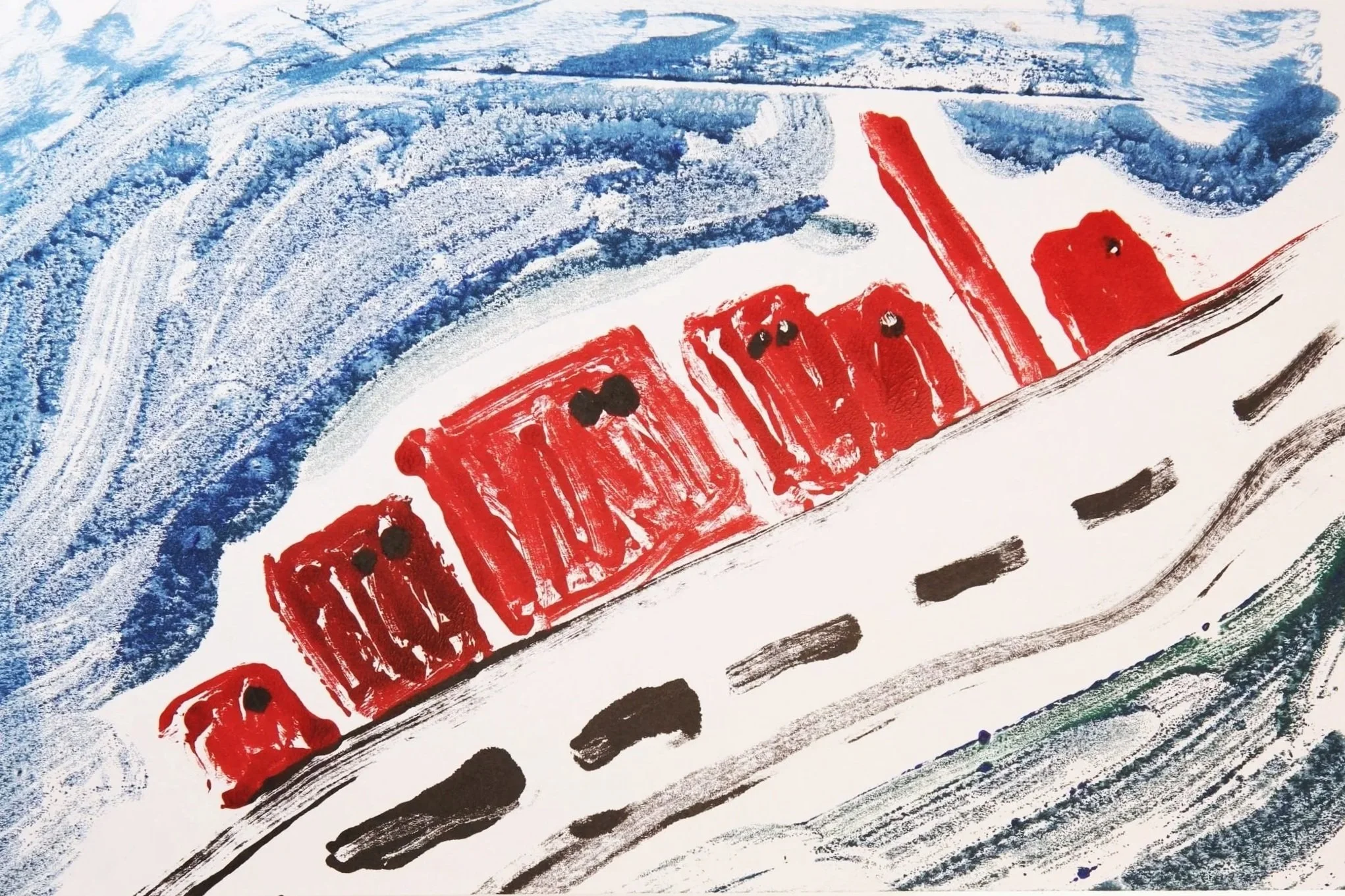
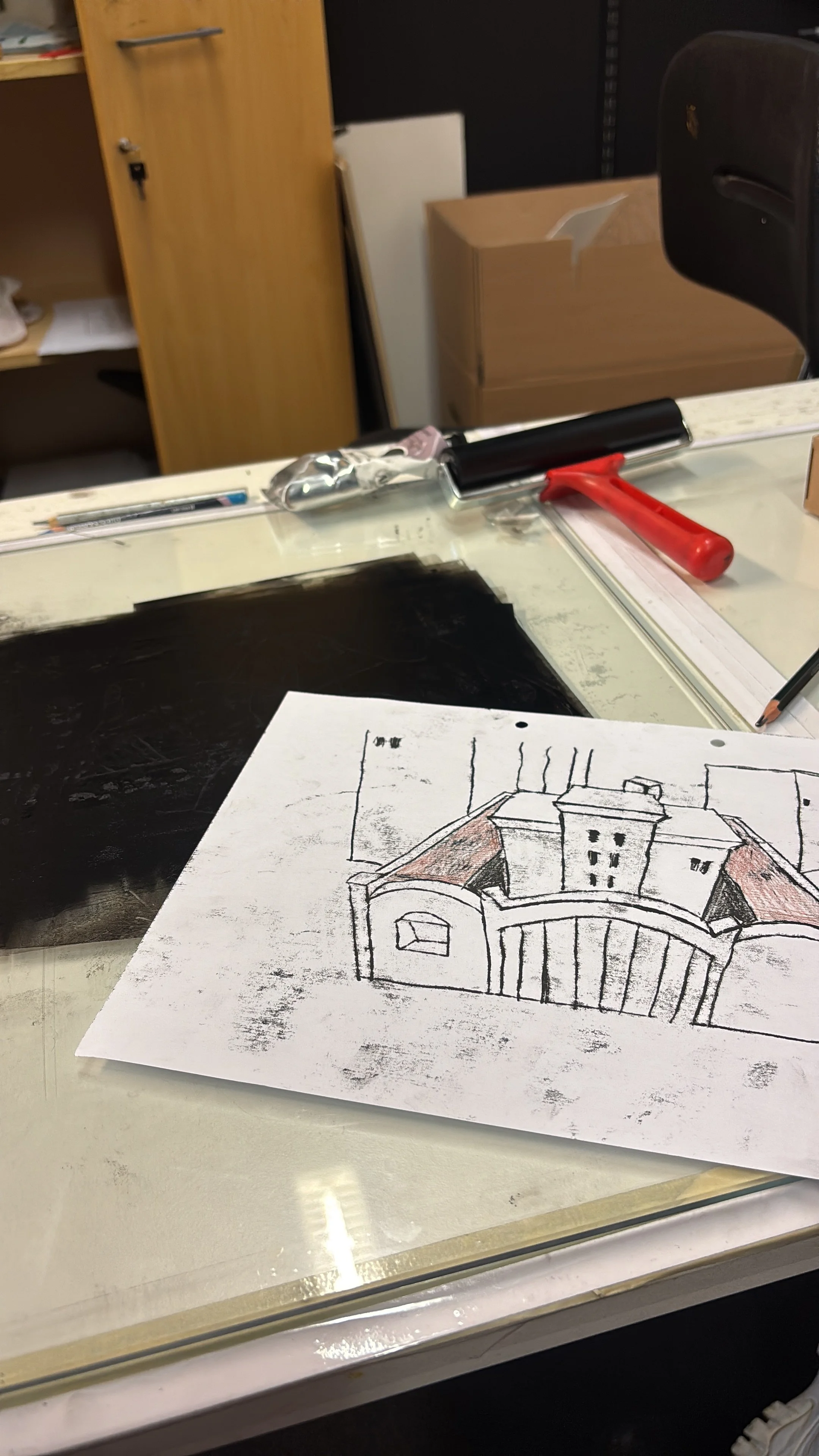
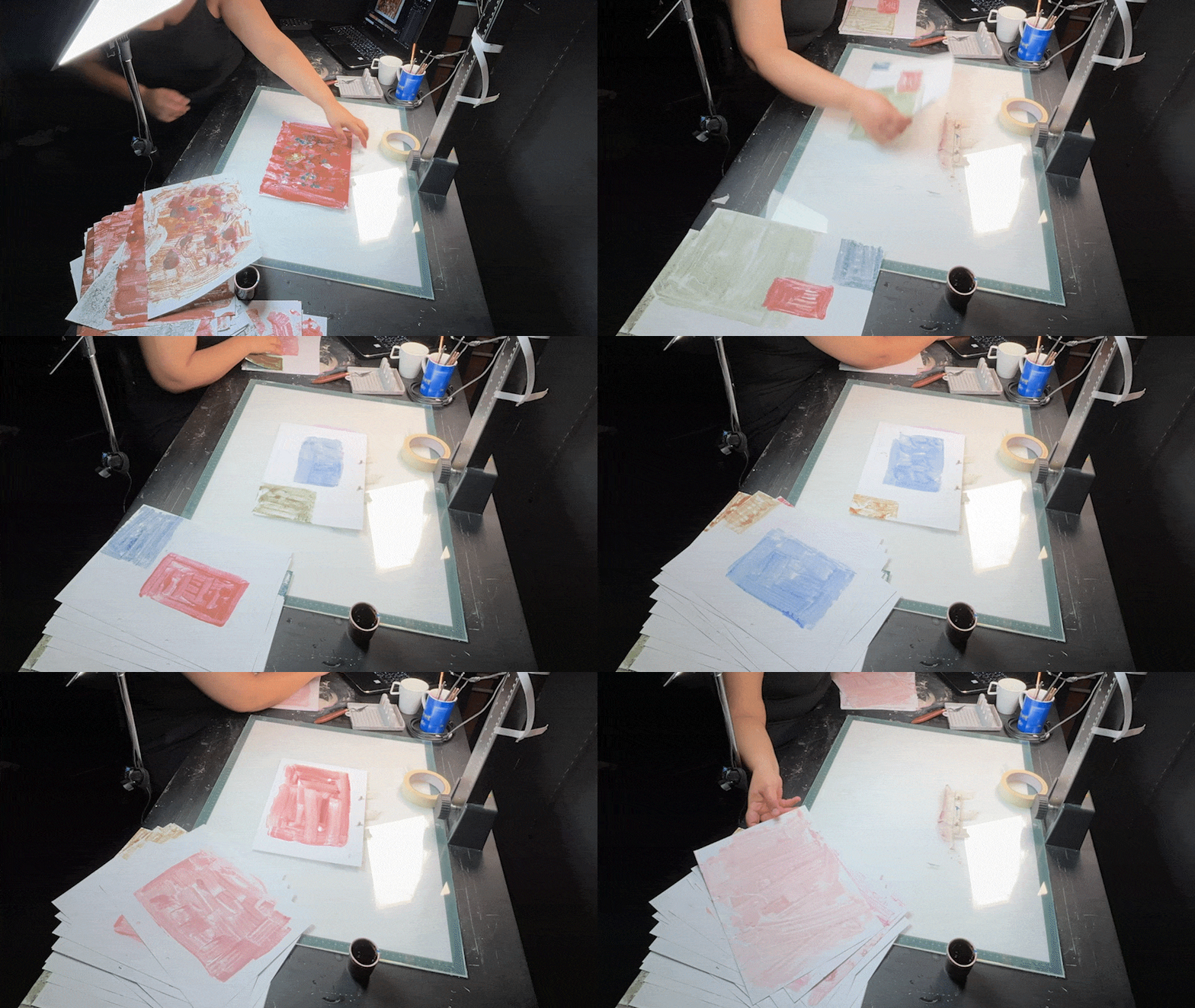
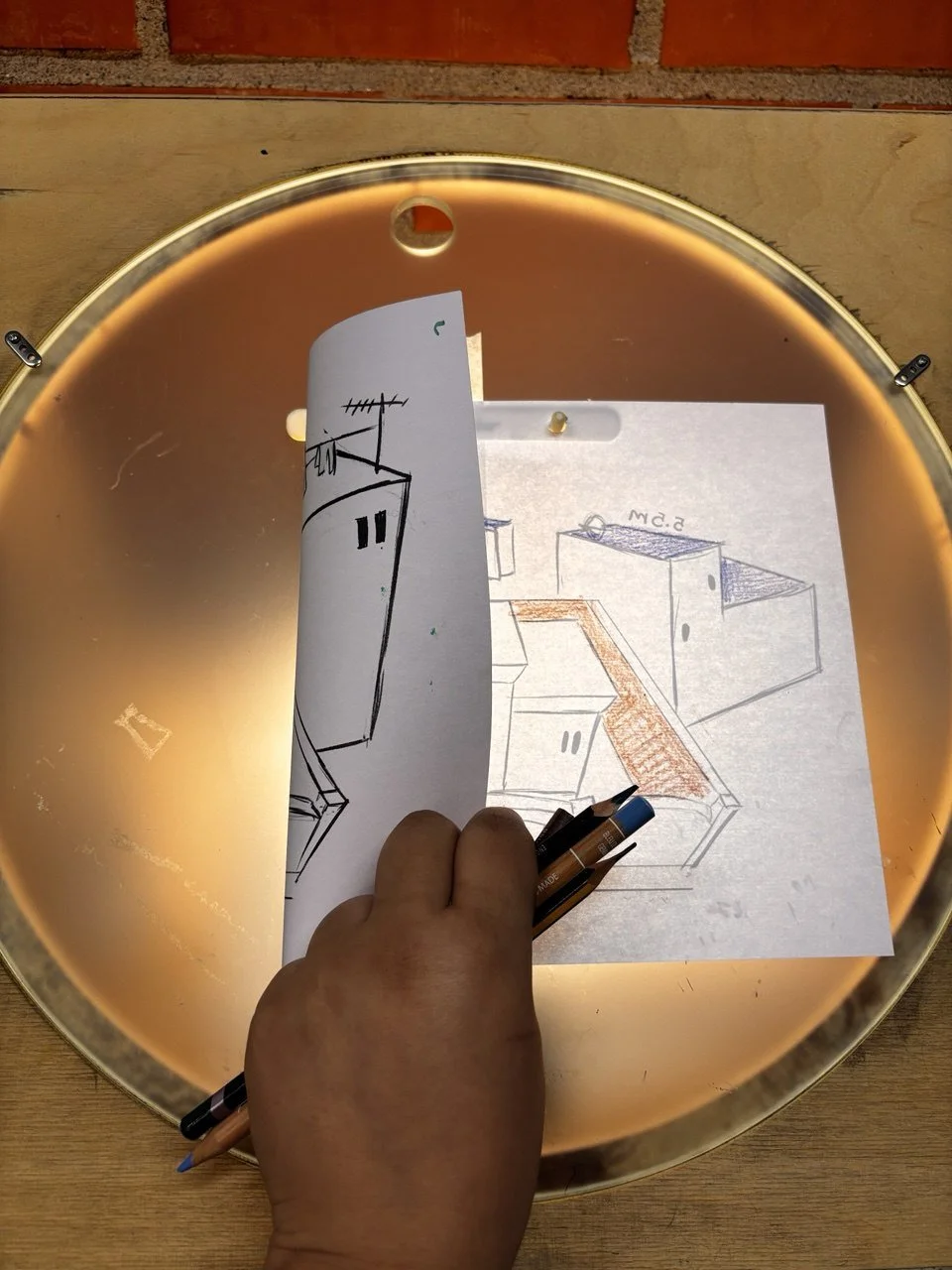
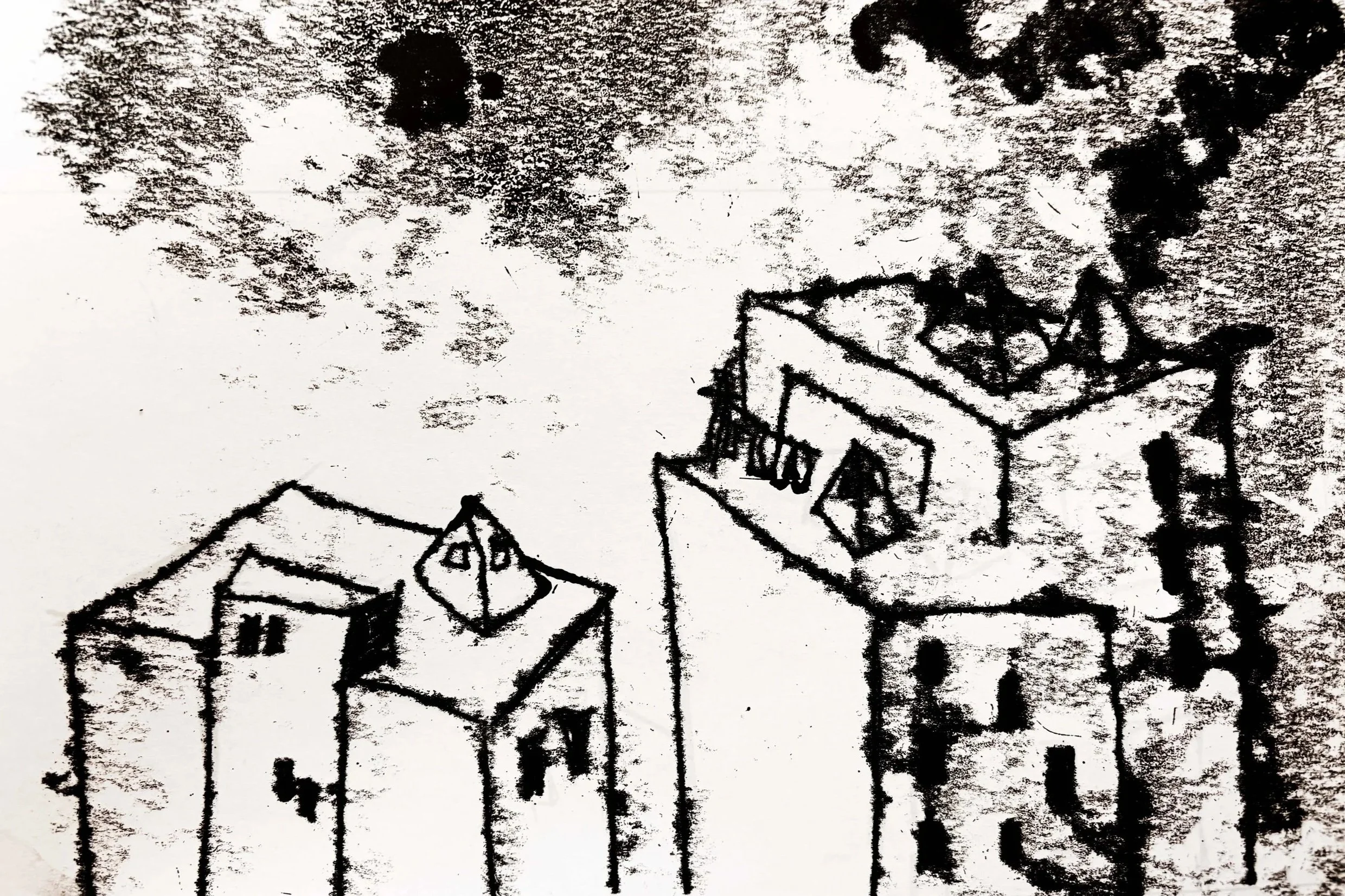
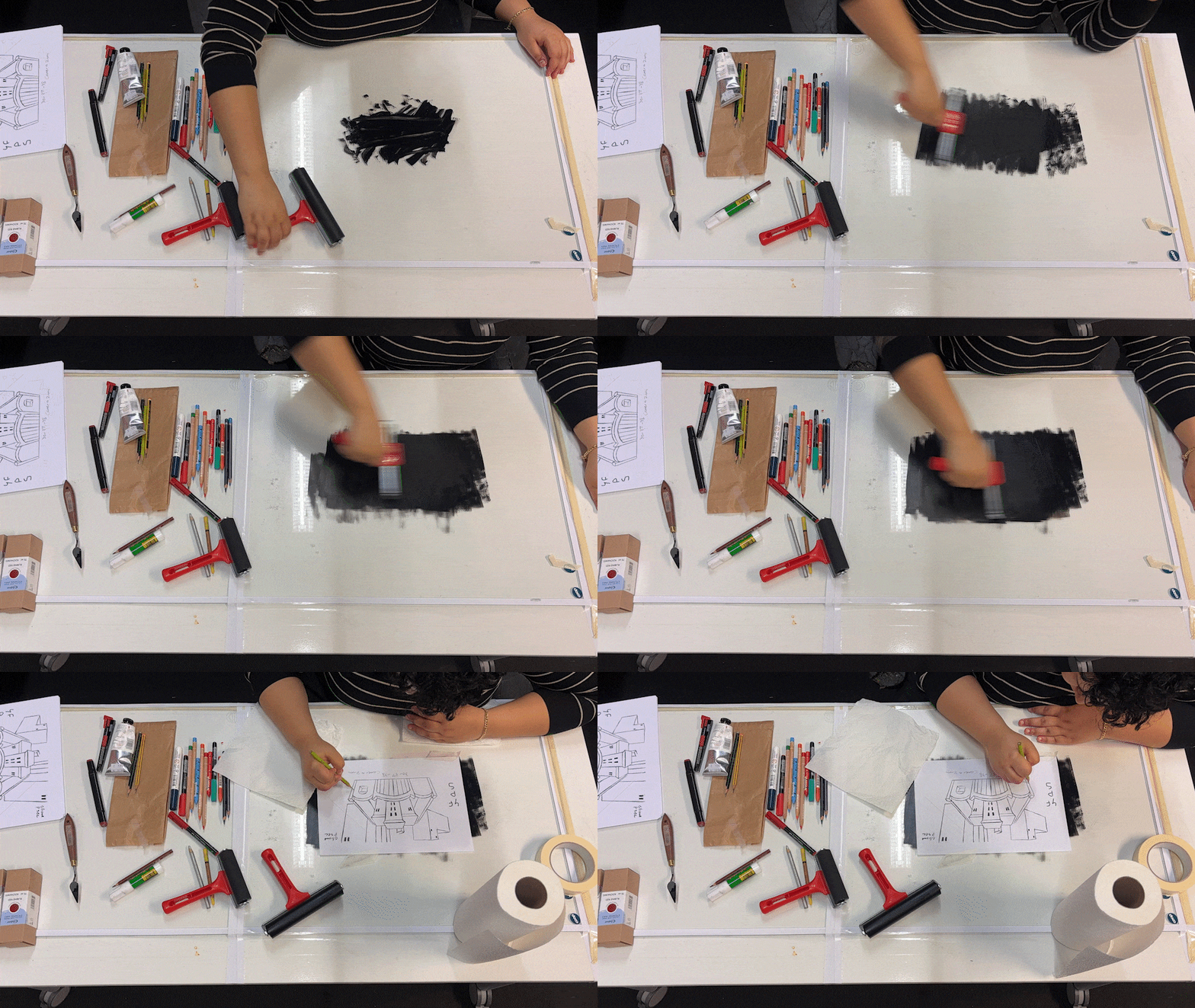
Around half of my film is created using monoprint, a printmaking technique with a painterly quality where no two prints can ever be exactly the same. There are various approaches to monoprint, which two of them are more common and have a faster printing process. The first version is trace monoprint: in this path the ink is applied on the glass, then the paper is placed over the ink and the image is drawn on the paper. When we flip the paper, we see the painted version of the drawing on the other side. In the second version, the painting is done with the colors on the glass and then the paper is placed over the painting to make the print. In my film I combined both of these approaches.